Things To Do in Hoi An: A–Z Experience Guide
Things To Do in Hoi An: A–Z Experience Guide
This article compiles information from multiple sources and has been rewritten to avoid duplicate content. Photos: Wikimedia Commons, Unsplash (royalty-free / CC).
Hoi An – an ancient town on the lower Thu Bon River in Quang Nam Province – is not only a UNESCO World Cultural Heritage site (1999) but also a destination that captivates visitors with its old architecture, distinctive cuisine, and a wide range of experiences. Below are suggestions for things to do in Hoi An, organized by theme to help you plan your trip, whether you have just one day or several days.
1. Explore Architecture and Historic Sites in the Ancient Town
Stroll Around and Visit Ancient Houses and Assembly Halls
Hoi An Ancient Town gathers hundreds of old houses built from the 17th–19th centuries, blending Vietnamese, Japanese, Chinese, and Western architecture. It is best to spend your morning or late afternoon walking along the small streets to avoid the midday heat.
- Tan Ky Ancient House (101 Nguyen Thai Hoc): Over 200 years old, with precious wooden frames, carved horizontal lacquered boards, parallel sentences, and antiques reflecting the life of ancient merchants.
- Phung Hung Ancient House (4 Nguyen Thi Minh Khai): A national relic that used to trade silk, ceramics, and salt; features intricate architectural carvings.
- Fujian Assembly Hall (46 Tran Phu): Built in 1697, dedicated to the sea goddess Thien Hau; famous for its three-entrance gate, courtyard, and beautiful main hall.
- Chaozhou Assembly Hall (157 Nguyen Duy Hieu): Dedicated to General Ma Yuan (Phuc Ba), with characteristic Chinese wooden architecture and calligraphy plaques.
- Ong Pagoda (Quan Cong Temple): A temple strongly reflecting the beliefs of the Chinese community, home to many ancient artifacts.
- Tran Family Chapel: Represents clan culture, traditional rituals, and the architecture of ancient Vietnamese wooden houses.
Japanese Covered Bridge – An Unmissable Icon
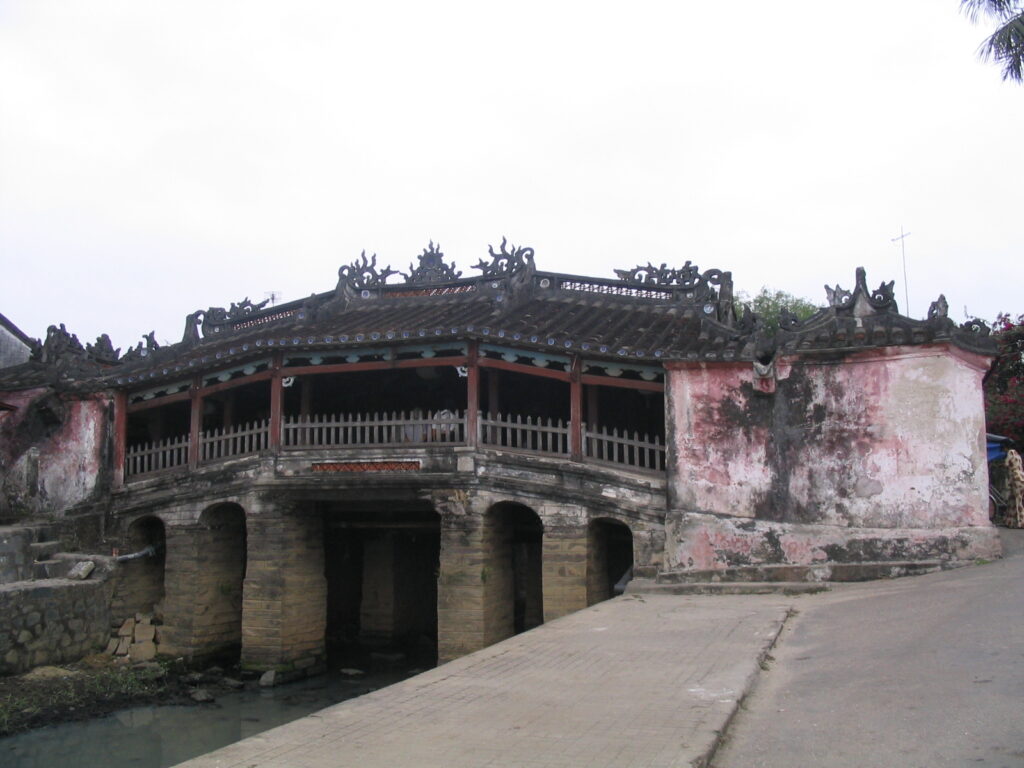
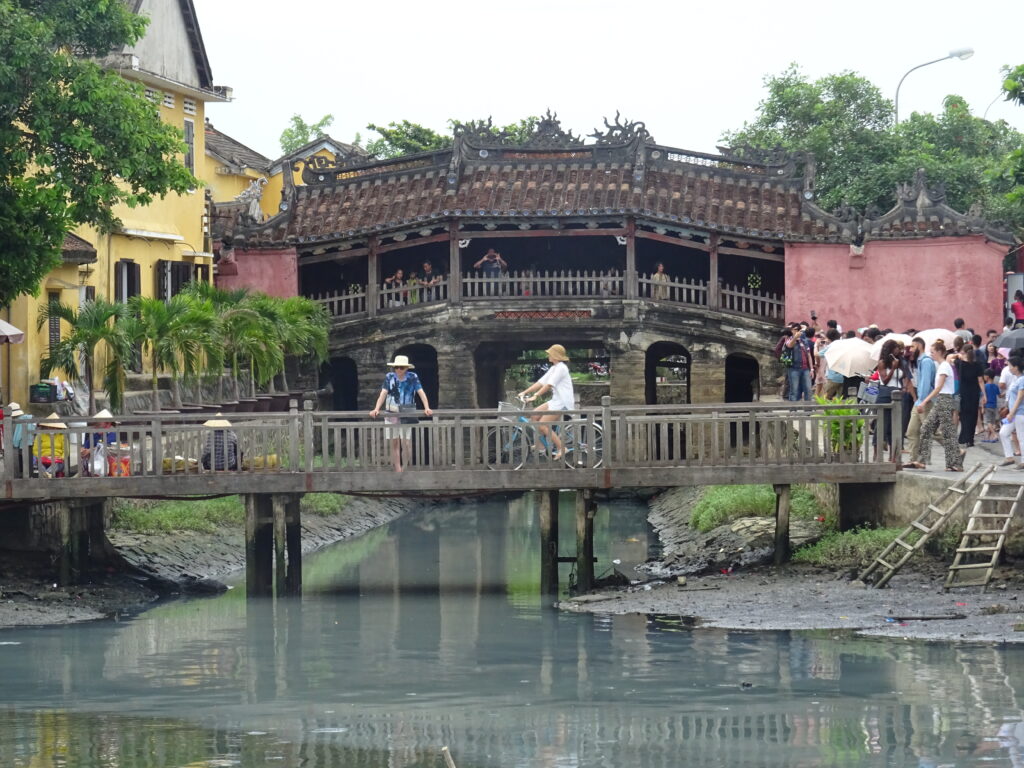
The Japanese Covered Bridge (Chua Cau) spans the Hoai River and was built in the late 16th century. It is about 18 meters long, roofed with yin-yang tiles. At both ends of the bridge stand monkey and dog statues (linked to the years the bridge was constructed, according to legend). It is best to visit at sunset for photos and to admire the reflection of light on the water.
2. Experiences Along the Hoai River and at Night
Boat Ride and Lantern Releasing
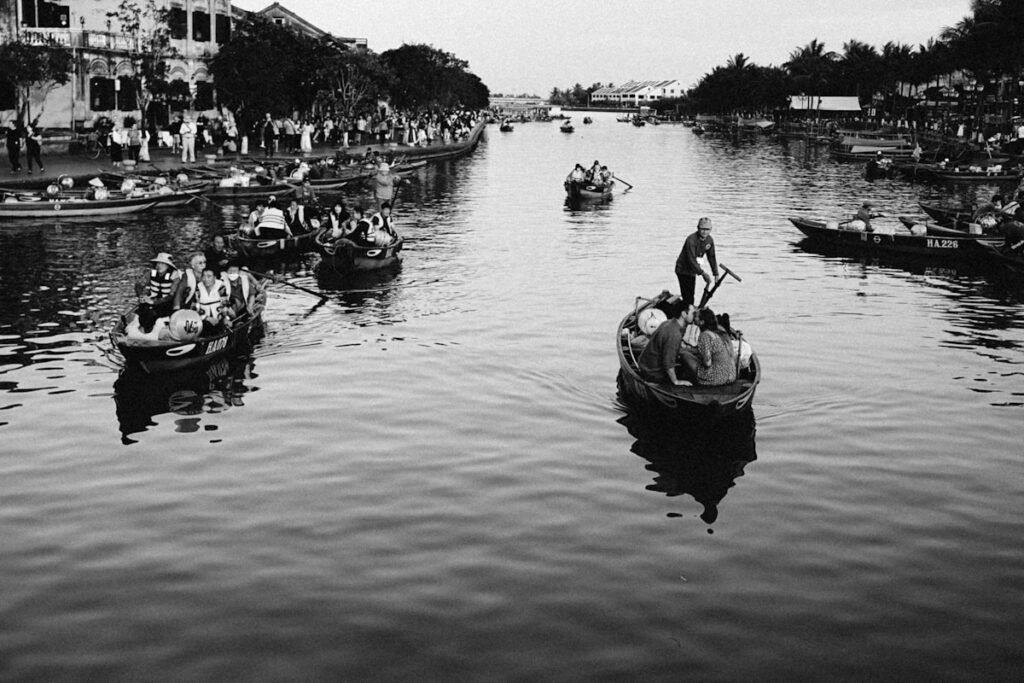
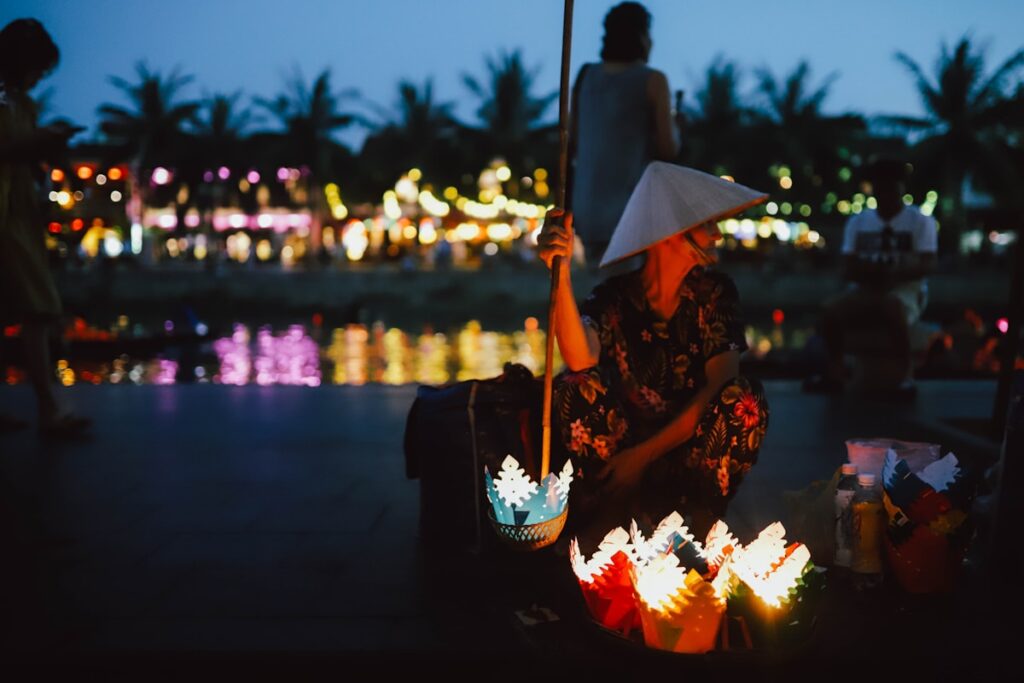
Taking a wooden boat along the Hoai River at dusk or when lanterns are lit is a popular experience. Reference prices are around 100,000–200,000 VND per trip (2–4 people). On the 14th day of each lunar month, the town hosts the “Old Town Night”: electric lights are turned off and only lanterns remain, with folk performances, Bai Choi singing, and lantern releasing on the river – very much worth experiencing.
Strolling Under Lantern Lights
The Nguyen Phuc Chu area is often called the “lantern street”. In the evening, walk along Bach Dang, Nguyen Thai Hoc, and Tran Phu streets to enjoy the old houses, shops, and lantern reflections on the river.
Night Market and Street Food
The night market (around the Thu Bon River / Nguyen Hoang area) is open until about 11 p.m. You can stroll while snacking on sweet soups, cakes, and grilled seafood. Combine it with listening to Bai Choi singing on Bach Dang Street to complete your night in Hoi An.
3. Food – What to Eat in Hoi An
- Cao Lau: Chewy noodles made with water from Ba Le Well and ash from Cham Island wood, served with fresh herbs and char siu pork. Suggestions: Cao Lau Ba Be (in the market), Thanh Restaurant.
- Banh Mi (Vietnamese Baguette Sandwich): Banh Mi Phuong (2B Phan Chu Trinh), Madam Khanh – bread is reheated on charcoal with a wide variety of fillings.
- Mi Quang: Mi Quang Di Hat (81 Phan Chu Trinh), Mi Quang Ong Hai (6A Truong Minh Luong).
- Hoi An Chicken Rice: Ba Buoi Chicken Rice, Ba Ty (25–27 Phan Chu Trinh), Ty Chicken Rice.
- White Rose Dumplings (Banh Bao – Banh Vac): White translucent dumplings filled with shrimp and pork, often called “white rose” dumplings.
- Banh Bot Loc (Tapioca Dumplings): Common street snack on Le Loi Street.
- Mot Herbal Drink: A refreshing herbal drink (lemongrass, lime, chrysanthemum, monk fruit, etc.), famous at 150 Tran Phu.
- Tube Ice Cream (Kem Ong): A nostalgic refreshment; worth trying on a hot day.
Hoi An Market (at the intersection of Tran Phu, Bach Dang, and Nguyen Thai Hoc) opens from about 6 a.m. to 10 p.m., with a food court serving cao lau, mi Quang, banh xeo (Vietnamese crepes), and banh mi. Dishes usually range from 20,000–50,000 VND.
4. Craft Villages and Outskirts Activities
Bay Mau Coconut Forest (Cam Thanh)
Less than 15 minutes from the old town. Take a round bamboo basket boat through nipa palm groves, watch basket-boat spinning performances, listen to local stories, and try rowing, crab catching, and rice paper making. Ideal for families and groups of friends.
Thanh Ha Pottery Village
Located 2–3 km west of the center along the Thu Bon River, this pottery village has a history of over 500 years. Visit to see the pottery-making process, try molding/painting items yourself, and buy products as souvenirs.
Tra Que Vegetable Village (Cam Ha)
About 3 km from the old town, this traditional vegetable-growing village is over 300 years old. You can visit the gardens, learn about local agriculture, and combine the trip with a cooking class (for example, Tra Que Water Wheel).
Hoi An Silk Village
Around 1 km from the old town: see the silk-weaving process and have clothes tailored on site. Closely associated with Hoi An’s famous tailoring services (Yaly Couture, A Dong Silk, Bao Khanh Silk, Thu Thuy Silk, etc.).
Lantern Workshops and Handicrafts
Many workshops offer lantern-making experiences (bamboo frame, silk covering) costing around 150,000 VND per person for 45–60 minutes. You learn the craft and bring home a handmade souvenir.
5. Beaches and Cham Islands
- An Bang Beach: About 4 km from the old town, a quiet, less-crowded beach with white sand and clear water; lined with cafes and seaside restaurants.
- Cua Dai Beach: Around 5 km away, a large beach suitable for swimming, playing beach volleyball, and picnics. In the early morning, you may see fishing boats returning to shore.
- Cham Islands (Cu Lao Cham): Speedboat from Cua Dai pier takes about 20 minutes. A UNESCO Biosphere Reserve where you can snorkel to see coral reefs, visit an ancient well, Hai Tang Pagoda, and enjoy fresh seafood.
6. Cultural Activities and Classes
- Cooking Classes: From selecting ingredients at the market to cooking cao lau, mi Quang, and banh xeo; prices typically range from about 429,000–569,000 VND per person, depending on the program.
- Tailor-Made Clothing: Hoi An is famous for fast tailoring (ao dai, dresses, shirts, suits); usually completed in 4–8 hours or within 24 hours, with prices depending on fabric and style (from around 700,000 VND per outfit and up).
- “Hoi An Memories” Show: A large-scale outdoor performance showcasing the history and culture of the ancient town, often combined with lantern releasing on the Thu Bon River for a very impressive experience.
7. Getting Around and Practical Tips
- Within the Ancient Town: Walk or cycle (many homestays/hotels provide bicycle rentals). Cyclo rides are around 150,000–200,000 VND per hour. Walking streets: roughly 9–11 a.m. and 3–9 p.m. (in summer sometimes until 10 p.m.). Motorbikes are banned during certain time slots (for example 5–9 p.m.).
- Getting to Hoi An: About 30 km from Da Nang – taxi/Grab costs around 300,000–400,000 VND per way; public bus route 01 about 30,000 VND per trip; motorbike rental 120,000–150,000 VND per day (excluding fuel).
- Best Time to Visit: The dry season (February–August) is ideal for outdoor activities; March–May has milder weather. During the rainy season (September–January) occasional local flooding may occur, but the ancient town is quieter with fewer tourists. On full-moon days and Tet (Lunar New Year), it gets crowded, so you should book accommodation in advance.
- Entrance Tickets: The common ticket for the ancient town (reference 2025): about 80,000 VND for Vietnamese visitors, 120,000 VND for international visitors; children get discounts. Some heritage sites can be selected for visit within this ticket package according to regulations.
Summary
The best things to do in Hoi An can be summed up as: (1) visiting ancient houses, assembly halls, and the Japanese Covered Bridge; (2) taking a boat ride, releasing lanterns, strolling under lanterns, and exploring the night market; (3) trying cao lau, banh mi, mi Quang, chicken rice, and Mot herbal drink; (4) visiting craft villages (Bay Mau, Thanh Ha, Tra Que, Silk Village) and making lanterns; (5) spending time at An Bang and Cua Dai beaches or the Cham Islands; (6) joining cooking classes, getting tailor-made clothes, and watching the “Hoi An Memories” show. With just one day, you can combine the ancient town, food, and lantern releasing; with 2–3 days, you can add craft villages, beaches, and Cham Islands for a more complete trip. With this guide, you can easily plan the best things to do in Hoi An for one to three days. For more Vietnam travel tips, see our Vietnam travel guide and check official UNESCO information about Hoi An. With this guide, you can easily plan the best things to do in Hoi An for one to three days. For more Vietnam travel tips, see our Vietnam travel guide and check official UNESCO information about Hoi An.