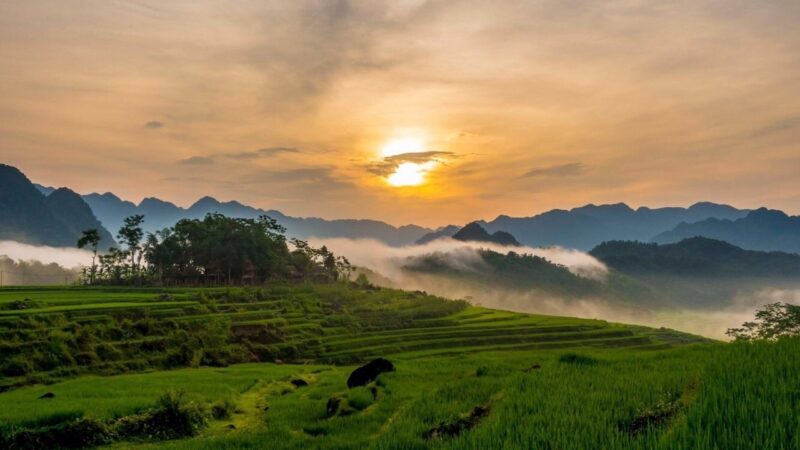
Hà Giang Travel Guide 2024 from A to Z: Transportation, Accommodation, Dining, Activities, and Specialties…
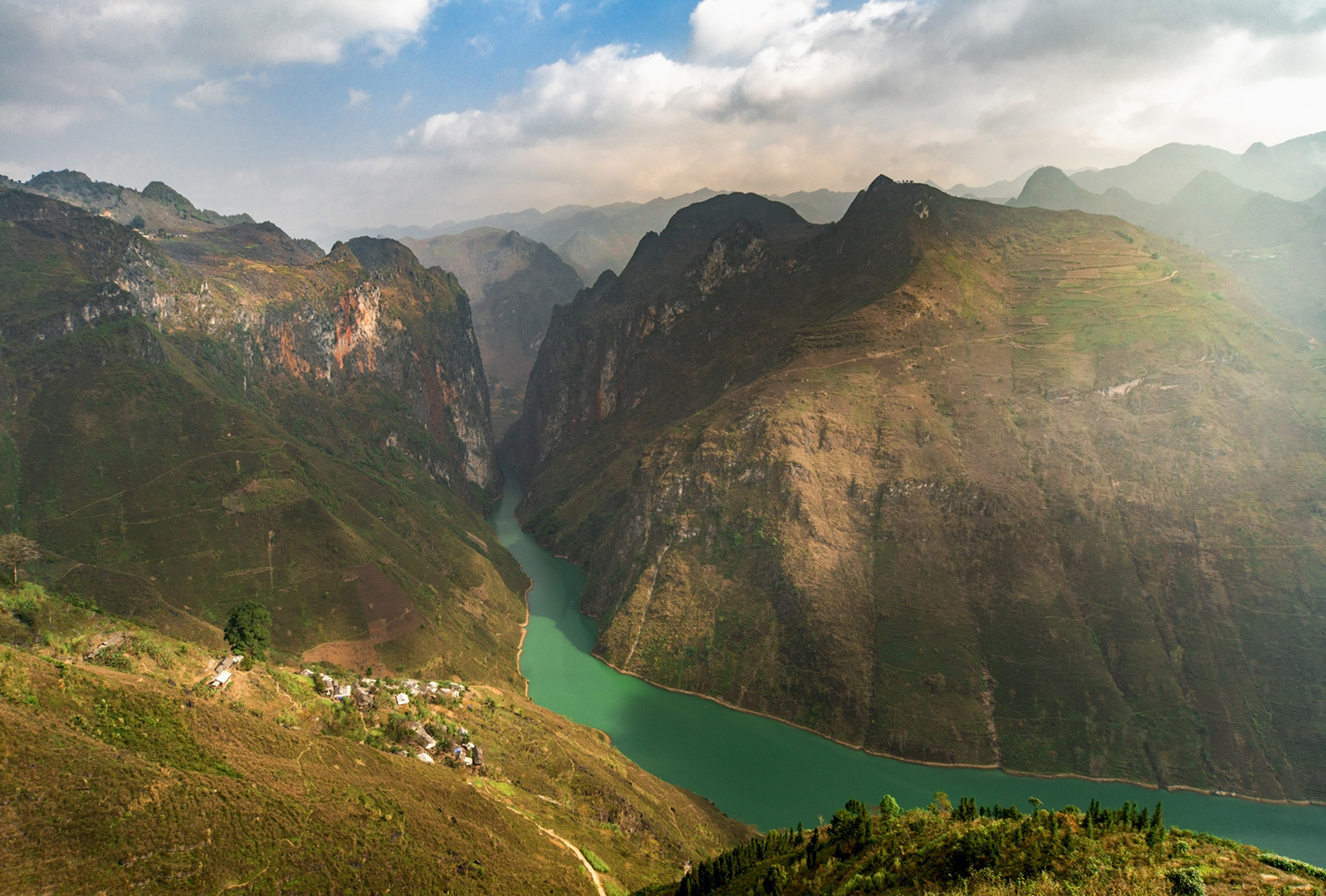
Hà Giang is the northernmost province of the country, bordered by Cao Bằng province to the east, Yên Bái and Lào Cai provinces to the west, Tuyên Quang province to the south, and China to the north. The winding and steep roads of Hà Giang are inherently challenging for drivers. However, when you look around, the tension gives way to a sense of relaxation as you admire the beauty of the highlands.

What is the best season to visit Hà Giang?
Hà Giang is a mountainous province with a distinctly colder climate compared to the adjacent lowland and midland regions. The average annual temperature is around 21-23 degrees Celsius. The climate is characterized by high humidity throughout the year, with frequent and prolonged rains.
You can visit Hà Giang at any time of the year. People often visit Hà Giang in the autumn when the rice fields turn golden. The most beautiful time is in October, November, and December, when the buckwheat flowers and mustard fields are in full bloom. In spring, the plum and apricot blossoms turn the forests white, making you feel as if you are floating on clouds.
In May, the terraced fields glisten during the water pouring season. In June and July, many people miss out on Hà Giang due to the unexpected summer rains. However, this humidity gives the mountains and forests a lush green color that captivates visitors.
Transportation
Traveling to Hà Giang from northern provinces is very easy, as there are many direct bus services. For those traveling from the southern or central regions, it’s best to start your journey from Hanoi. From Hanoi, there are buses departing almost every hour from Mỹ Đình, Lương Yên, Yên Nghĩa, and Gia Lâm bus stations.
Visitors can choose between sleeper buses or high-quality limousine buses, depending on their budget. However, it is advisable to travel by night bus to save time and conserve energy for the long exploration journey. The bus fare from Hanoi to Hà Giang and vice versa ranges from $8 to $13 per trip.
Upon arriving in Hà Giang City, you can rent a motorbike to explore on your own for $6 to $13 per day. Alternatively, if you don’t have enough time and energy, or if your group includes elderly people and children, it is recommended to rent a 7-16 seat service car.
Beautiful Hotels and Homestays
Families and couples seeking high-end, private accommodations can visit P’apiu in Yên Định commune, Bắc Mê district. Here, guests can immerse themselves in the highland colors along the longest brocade road in Vietnam and stay in villas designed in the traditional H’Mong style. The cost for one night is approximately $420.
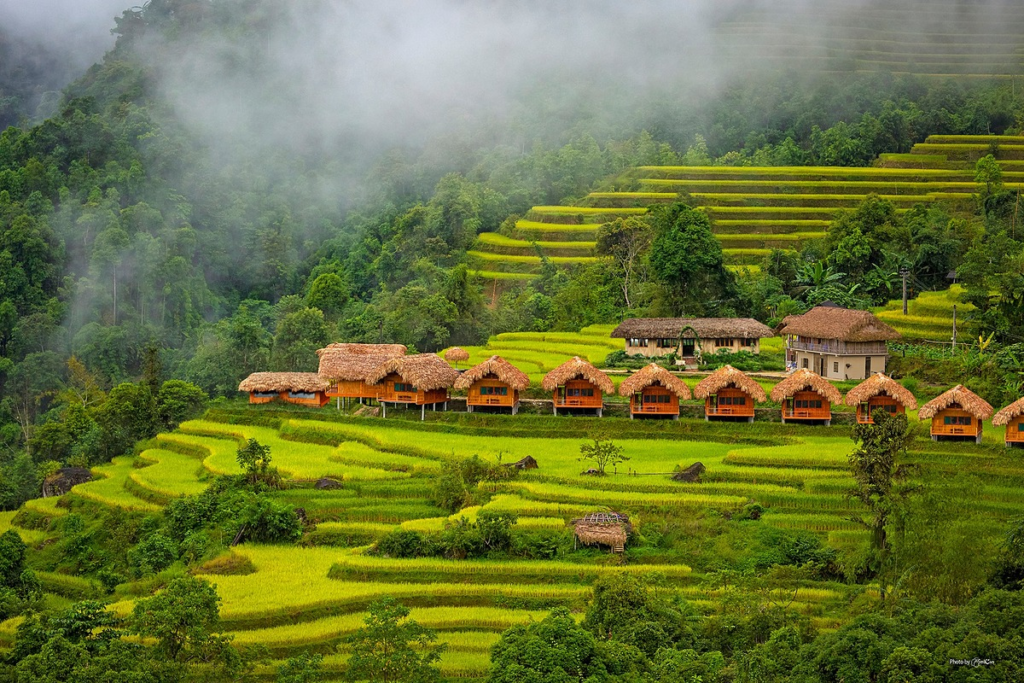
For those who love novelty, H’Mong Village with its unique mortar-shaped design is a great suggestion. This resort is located on the hills of Tráng Kìm, Quản Bạ, facing the Miện River and the majestic mountains in the distance. Guests can choose to stay in a community room for $17 per night or in a mortar-shaped bungalow for $100 per night.
For a more community-oriented and budget-friendly option, visitors can stay at various homestays. In Hoàng Su Phì, there are Hoang Su Phi Lodge and Kinh Homestay, located near the terraced fields in Nậm Hồng village; and Hồ Thầu Eco Village in Hồ Thầu commune, featuring traditional stilt houses with thatched roofs.
Additionally, you can stay at Chúng Pủa – Auberge de MeoVac (Mèo Vạc), which offers an authentic local experience with its earthen houses, or Bụi Homestay, a traditional stilt house in Đồng Văn. In Đồng Văn, there is also Hoàng Thân Ancient House for $4 per person and Ong Vàng Mèo Vạc for $10 per night. Near the Lũng Cú flagpole in Lô Lô Chải village, there is the Lo Lo Ancient House homestay.
Where to Go?
Since the tourist attractions in Hà Giang are far apart, you should plan for at least a 3-day, 2-night trip to have enough time to fully experience the sights. A 3-day, 4-night journey is often recommended by many travelers, and if you have more time, a 5-day trip would be even better.
Here is a suggested itinerary for a 3-day, 2-night trip:
Day 1: Hanoi – Hà Giang – Đồng Văn
To catch the Đồng Văn market on Sunday morning, depart from Hanoi on Friday night. At 8 AM the next day, head to Đồng Văn and take photos along the way while the morning air is still pleasant. The road from Hà Giang City to Đồng Văn should be divided into segments to enjoy the journey rather than driving straight through.
Segment 1: Hà Giang – Quản Bạ Heaven’s Gate (40 km)
From the city, the first stop is the Km 0 milestone, then travel about 40 km to Quản Bạ. Here, Heaven’s Gate is a famous check-in point, though in winter, you might encounter fog. If the weather is clear, you can take photos and admire the fields below.
From here, you can see Nặm Đăm Lake, located in Nặm Đăm village, a well-known Dao homestay village in Quản Bạ. Besides Heaven’s Gate, you can also visit the Twin Mountains (Núi Đôi Cô Tiên), which are not far away.
Segment 2: Quản Bạ Heaven’s Gate – Yên Minh Town (30 km)
Note that when you reach Cán Tỷ Bridge, there are two paths: the uphill route saves you 20 km but is more challenging and requires skilled driving. Plan your time to arrive in Yên Minh for lunch.
Segment 3: Yên Minh Town – Đồng Văn Old Quarter (45 km)
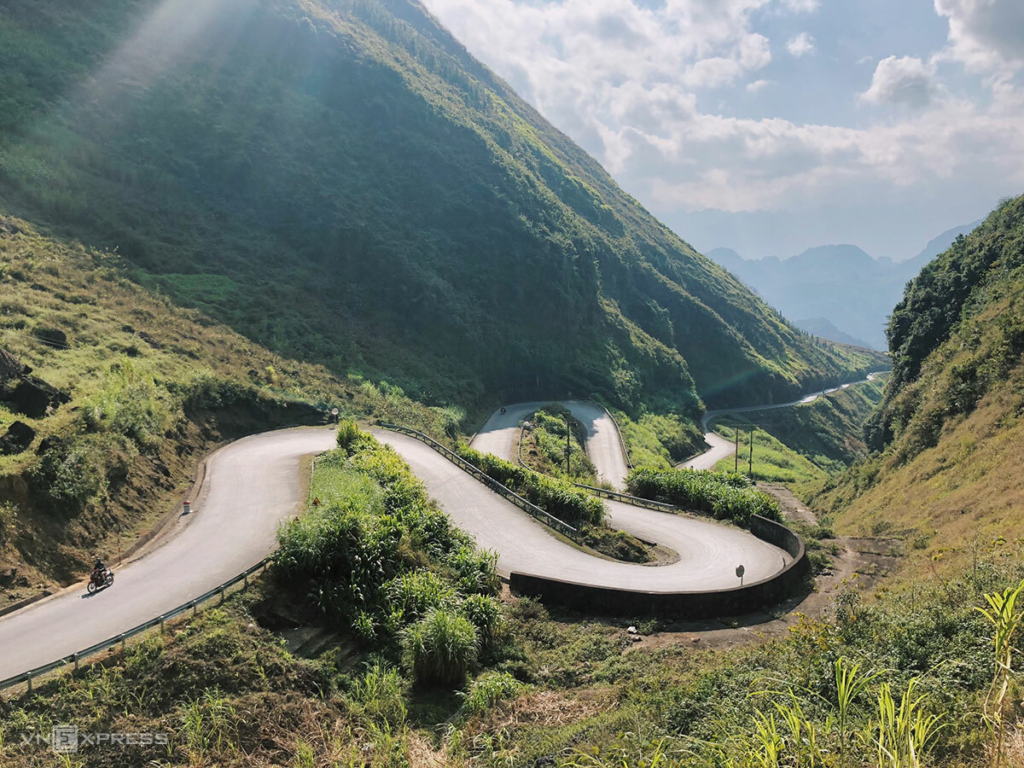
This segment is filled with beautiful landscapes and well-known tourist spots. These include Thẩm Mã Pass and the Nine Curves Pass (Đèo 9 Khoanh), iconic check-in points of Hà Giang. Here, you’ll often meet foreign friends, landscape photographers, and Hmong children carrying baskets of flowers.
Phố Cáo, an ancient village that hasn’t been commercialized, retains many traditional features of the old Hmong people. Pao’s House, the setting for many Vietnamese films, is also worth visiting. Pao’s House is both a local residence and a tourist attraction. These spots are about 10 km apart, so visit them while keeping track of time to reach Đồng Văn before dark.
Day 2: Đồng Văn – Mèo Vạc
Morning
- Đồng Văn Market: Spend the morning at the Đồng Văn market, a unique feature of the region that can’t be found in the lowlands. The bustling market offers a wide range of products, from common items like electronics, fruits, and clothes to ethnic specialties like flax, brocade, buckwheat cakes, and thắng cố (a traditional dish). If you’re buying souvenirs, choose easy-to-carry items like spices or flax fabric.
- Dinh Vua Mèo: Besides the market, you can visit the Palace of the H’Mong King. The palace, located in Sà Phìn commune, spans nearly 3 hectares in a valley. It was built in the early 20th century, modeled after Chinese architecture (Manchu dynasty) with intricate curves and carvings. The entrance fee is around $1.

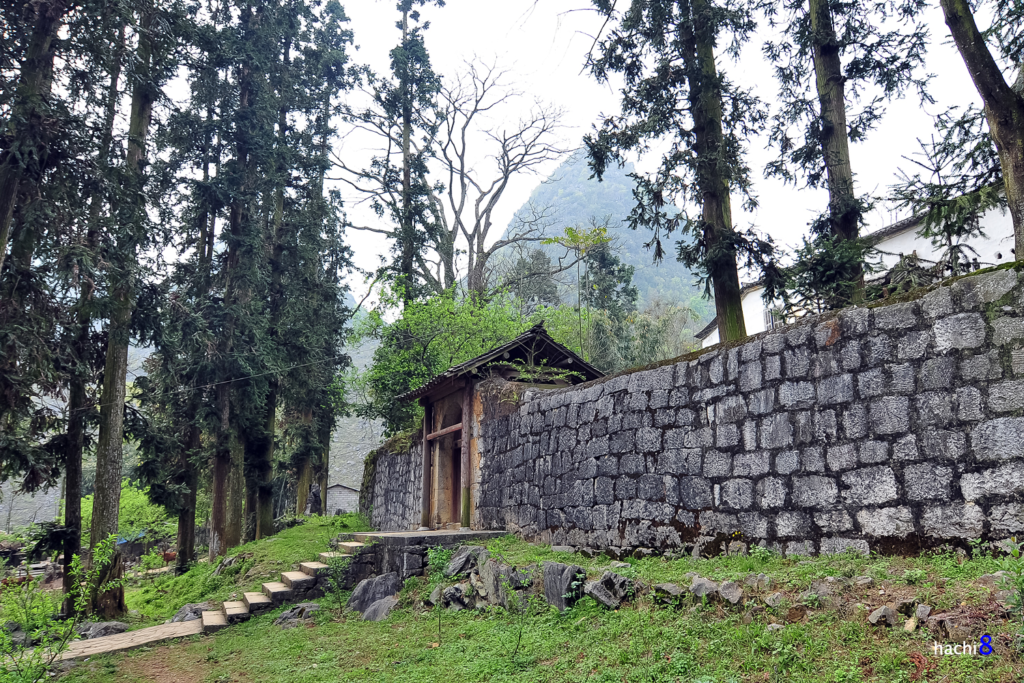
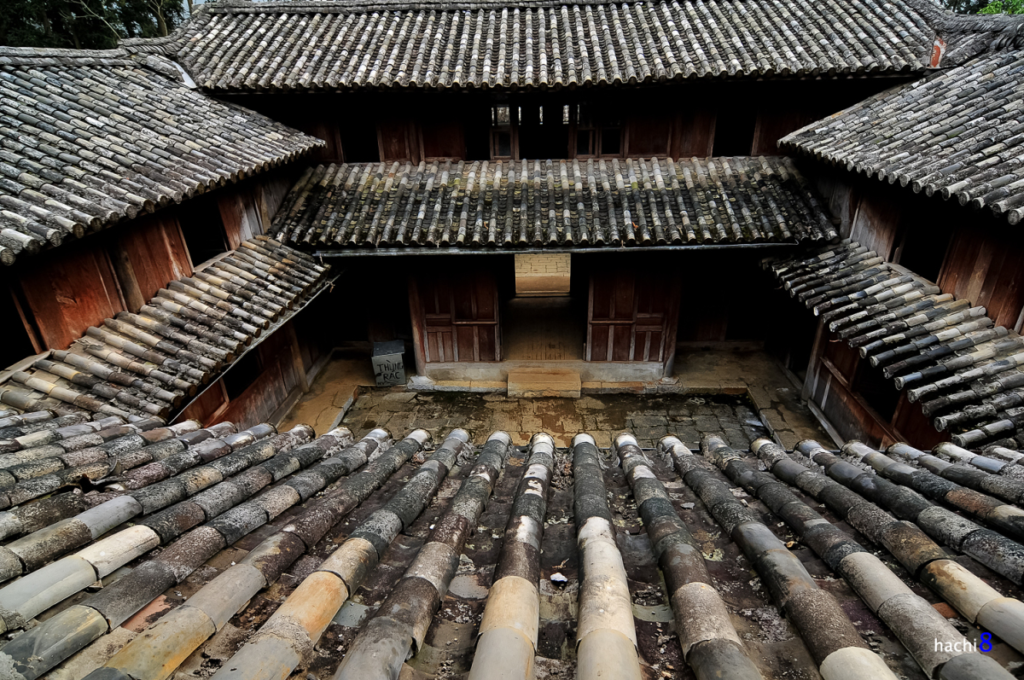
If you prefer, you can depart from Đồng Văn at 6:30 AM and head to Lũng Cú to visit the flagpole in the morning. This 25 km journey involves rough roads with gravel, steep slopes, and potholes, taking about 1.5 hours. Once there, hike to the flagpole to enjoy the view of the borderlands. If you have time, relax at the Cực Bắc Cafe.
Mid-Morning
- Return to Đồng Văn: Around 9:30 AM, return to Đồng Văn and then head towards Mèo Vạc, stopping at the Nho Quế River. The road down to the boat dock is steep and can be under construction, so skilled driving is necessary. If not confident, you can hire a local motorbike taxi service for about $6 round trip.
- Boat Trip on Nho Quế River: The challenging road and bumpy sections are worth it for the stunning emerald green river. Navigate the winding path hugging the mountain to reach the boat dock. A boat ride on the Nho Quế River costs about $4 per person for a 40-minute journey, usually stopping at the picturesque Tu Sản Canyon for photos.
Afternoon
- Mã Pì Lèng Pass: Around 2:30 PM, head towards Mèo Vạc to visit Mã Pì Lèng Pass. Despite its winding path, the pass is wide and flat, with mountains on one side and a cliff on the other. Surrounded by sky, clouds, and mountains, it’s perfect for leisurely sightseeing and photography.
- Happiness Road Museum: At the foot of the pass, visit the Happiness Road Museum to learn about the difficult history of building Highway 4C from Hà Giang City to Đồng Văn and Mèo Vạc.
- Tà Làng Village: The route from Mã Pì Lèng Pass to Tà Làng Village, Pải Lủng commune, Mèo Vạc district, is an unforgettable experience. The 8 km road features over 50 hairpin bends and steep slopes.
Late Afternoon
- Sunset Viewing: Around 5 PM, stop at the 12 km milestone to Mèo Vạc, one of the best spots to watch the sunset over Mã Pì Lèng Pass, with a view of the Nho Quế River. After the sunset, travel about 10 km to the Hmong Ethnic Cultural Village in Pả Vi for an overnight stay.
Day 3: Mèo Vạc – Hà Giang City – Hanoi
Early Morning
- Pả Vi: Wake up to the serene and peaceful surroundings of Pả Vi, with the mountains enveloping you in green.
Morning
- Departure to Hà Giang City: Mèo Vạc is about 150 km from Hà Giang City. Start your journey early to catch the bus back to Hanoi. There are two bus schedules to choose from: 2 PM (arrives in Hanoi at 9 PM) and 9 PM (arrives in Hanoi at 4 AM the next morning).
If you choose the 2 PM bus, leave Mèo Vạc at 8 AM and head straight towards Hà Giang City via the Mậu Duệ – Yên Minh – Quản Bạ route without stopping for sightseeing. Be aware that the road from Mèo Vạc to Mậu Duệ can be rough, with many potholes.
If you opt for the 9 PM bus from Hà Giang City, you will have time to visit a few more attractions along the way.
Sightseeing Option (for 9 PM Bus)
- Mậu Duệ – Đường Thượng: Take the route from Mèo Vạc through Mậu Duệ to Đường Thượng.
- Lùng Tám Weaving Village: Visit the Lùng Tám weaving village, known for its traditional textiles.
- Lùng Khúy Cave: Pass through Quản Bạ and visit Lùng Khúy Cave, a fascinating natural wonder.
Afternoon
- Arrival in Hà Giang City: Return to Hà Giang City in time for your chosen bus departure.
By following this itinerary, you’ll maximize your time and experience in Hà Giang, ensuring a memorable and fulfilling trip.
Hà Giang Specialties
When visiting Hà Giang, don’t miss out on these local specialties:
Cơm Lam Bắc Mê: A specialty of the Tay ethnic group, this dish involves rice cooked in bamboo tubes. The rice has a wonderful aroma from the bamboo and is often enjoyed with sesame salt or grilled river fish.
Bánh Cuốn Trứng: A unique delicacy with thin, wet rice flour sheets filled with runny egg yolk. It’s a distinctive treat from this northern frontier.
Cháo Ấu Tẩu: This is a traditional porridge made with a mix of sticky rice (nếp cái hoa vàng) and regular rice, combined with ấu tẩu (a local root) cooked in a flavorful broth with pork leg and aromatic herbs. Cháo Ấu Tẩu is not just a dish but also a remedy for colds.
Bánh Chưng Gù: A type of sticky rice cake wrapped by hand, with green or black-colored leaves depending on the type of rice used. The green version uses ginger leaves, while the black one uses glutinous rice. It contains both lean pork and fat. It is made daily by a few families in Hà Giang City, but you need to order in advance due to limited availability. Each cake costs around $0.70.
Thắng Dền: Similar to the bánh trôi tàu from Hanoi, this dessert is made from glutinous rice flour and can be served plain or with a filling of mung beans.
Thắng Cố: A specialty of the Northwest with a unique taste, made from various herbs like cardamom and citronella, and cooked with fatty meat. It’s a dish not everyone may enjoy, but it’s a true local delicacy.
Cháo Ấu Tẩu: Made from sticky rice, pork leg, and ấu tẩu root. The root must be cleaned, soaked in rice water overnight, and then simmered for about 4 hours until soft. It’s essential to prepare it carefully as ấu tẩu is toxic and must be well-cooked. It helps in relieving hangovers and easing joint pain.
Bánh Tam Giác Mạch: A characteristic cake of the Hmong people from the rocky highlands. It involves multiple steps: harvesting and drying buckwheat seeds, grinding them to a fine powder, mixing with water, shaping into flat circles, and steaming. The cakes are then toasted or fried. They have a slightly sweet, fragrant flavor with a coarse texture.
Souvenirs to Buy in Hà Giang
- Hà Giang Oranges: Renowned for their juicy, sweet flavor, Hà Giang oranges are a popular souvenir. These oranges, grown primarily in Bắc Quang, Quang Bình, and Vị Xuyên districts, make a delightful gift for friends and family.
- Lạp Xưởng Gác Bếp: This traditional dried sausage is made from a mix of lean and fatty pork, seasoned with salt, sugar, monosodium glutamate, white wine, ginger, and a touch of dried and ground mắc mật fruit. It is smoked over a fire, giving it a unique and memorable flavor.
- Mint Honey: Harvested from September to December, mint honey from the rocky highlands has a distinctive lemon-yellow color and a rich, fragrant flavor with a refreshing minty sweetness. Along National Route 4C, particularly in Quản Bạ, Đồng Văn, and Mèo Vạc districts, you can find beekeeping huts where honey is extracted on-site.